Showing posts with label AZ vegetable gardens. Show all posts

Tuesday, November 16, 2010

5 Tips for Growing Leafy Greens


1. Most greens prefer a loose, fertile soil. You can achieve this by adding compost to the soil and making sure all the large clumps of soil are broken up.

2. Be sure to plant the seed at the appropriate depth. Most leafy greens are small seeds and get planted at about 1/8 inch. If planted too deeply they may not germinate.

3. Leafy greens are cool weather plants. In the southwest you can plant them starting in October and through the winter. Once the temperatures start to rise above 75 degrees, they will ‘bolt’ and go to seed.

4. Extend the harvest season by planting the seeds over several weeks (succession planting). Once the first planting germinates (pokes through the soil), plant some more!

5. Harvest greens by taking the young leaves from the outside on the plant, leaving the younger inner leaves. The plant will continue to grow from the inside. If you have several plants growing on the garden of each kind of plant you can have fresh greens all season long!

The beets and broccoli rabe featured here in the pictures were planted by seed on October 17, 2010.  I have been eating the broccoli rabe already as I thin them out.  The beets are next!

Happy eating from your garden!
The Garden Goddess
http://www.down2earthgardens.com/


Wednesday, October 27, 2010

The Waiting Game Begins

The Waiting Game Begins


I had 9 wonderful garden helpers about two weeks ago help me plant my winter garden. I taught them the proper way to plant seeds with learning about seed depth and spacing. They got into the garden soil, making furroughs for the tiny seeds and poking holes for the bigger ones. Here's what we planted: garlic, onions, beets, broccoli rabe, (2) lettuce, Swiss chard, cilantro, turnips, arugula, green onions, peas and parsley.


And three days later the broccoli rabe sprouted from the soil. Now the garlic and onions are up too! So are the lettuces, peas and the arugula. Some have not sprouted yet and I am not really worried. The germination days on the back of the seed packet help us track when to expect the seeds to break through the soil so we don’t have to guess.


But now the waiting game starts. The plants will get bigger every day but the vegetables may not be ready for harvest for at least another 60 days.


So for now I am still going to the Farmer’s Markets and the store to provide my food. But soon my patience will pay off and I will be eating from my garden!!


Happy Digging

The Garden Goddess

www.down2earthgardens.com

Thursday, September 30, 2010

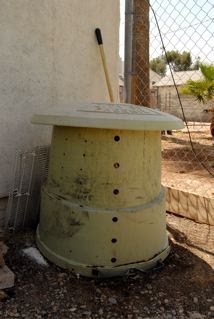
Turn Your Trash into Great Garden Fertilzer

Kitchen scraps, shredded paper, and lawn clippings usually end up in the trash bin, but can easily and cheaply be turn into a source of rich nutrients to add to garden beds. This is called composting, and while many people assume that composting is a complex and challenging undertaking, there’s really no need to be intimidated.


The benefits for the garden are many: it improves soil structure and also water retention, helping to keep plants healthier for longer in dry conditions. It provides a source of slow-release, organic fertilizer for plants, while at the same time boosting the community of microorganisms and other creatures beneficial for plant.

Composting is as easy as 1-2-3.

1) Get a bin: Compost needs a certain critical mass of organic material to create enough heat for decomposition to occur.. Something to contain this matter is helpful. Most city waste departments now offer a free or low cost waste bin to be used for compost. Just check your city’s website or call the waste management department.

2) Fill it: All manner of waste can go into a compost bin. There are two basic types of organic waste: nitrogen-rich (aka “greens”) and carbon-rich (aka “browns”). Use about twice as much carbon-rich material as nitrogen-rich. Some good carbon-rich materials include dead tree and shrub leaves, cardboard, newspaper, shredded paper and wood chips. As far as nitrogen-rich materials go, think of fresh grass clippings, green yard waste, vegetable scraps from the kitchen and even hair (think of Fido’s brush).

3) Turn and water: Organic matter needs both oxygen and moisture to break down. To add more oxygen, give compost a turn every once in a while with a pitchfork or shovel and keep compost generally as moist as a wrung-out sponge.

There you have it! Let nature take its course. In a matter of time, some of the best garden food ever, all made from stuff that would have thrown away, is free to use in the garden.

For more details including a complete list of WHAT you can compost -  attend a workshop I am doing on Saturday, October 2nd from 1pm - 2:30 pm with the Phoenix Permaculture Guild.

Location: Central Slope Design Center

Street: 8801 N. Central Ave
City/Town: Phoenix, AZ 85020

Hope to see you at class soon!

Happy Digging,
Doreen Pollack
aka the Garden Goddess
http://www.down2earthgardens.com/

Monday, September 13, 2010

Fall Means a Fresh Start in the Garden

There is a change in the air in Phoenix. The evenings and mornings are definitely cooler. The humidity is gone and so is the monsoon rain. The leaves on the Mulberry trees are starting to yellow slightly and drop.


This slight shift always has me feeling hopeful and excited for another planting and growing season. Time to clean out the garden beds, re-build the soil with my compost, rake it smooth and get the seeds planted. Time to make the row markers, set out a plan of what goes where, and start to think about the color that comes from flowers in the garden. Oh I almost forgot, I pick a new edible plant to grow each year – I wonder what it will be this year – Do you have a suggestion for me?


While I was watering yesterday, I noticed one of my artichoke plants is emerging from its summer rest. I have two – I hope the other one comes back!

I like to take a reasonably-paced approach to getting the gardens ready for a new season. I start with getting the garden cleared and soil amended one week. I like to let the compost and any other amendments sit in the ground for a week at least before I plant into it. Looks like I will be doing this on Sunday morning while it is cool. That also lets me take stock of my seeds and purchase anything I may still need. However – after the bounty I got at the American Community Gardening Association Conference I attended in August and the seeds I got at the Seed Swap last week I think I may be set this year!


I also have new seeds from Humble Seed for an herb garden – aptly called Uncle Herb’s Favorites – 10 different herbs in a great package that can be reused. What I love about this company is they are very particular about where they get seeds and the package them locally using the Marc Center.
So in a few weeks I will be planting out my new garden. I am excited about eating fresh lettuce, spinach and other greens, beets and peas – all in about 2 more months! The gap between will need to be supplemented by the farmers markets.


What are your plans for a fall garden? Please let me know if I can help. I am starting to book consultations now – just email me at gardengoddess@down2earthgardens.com or call 623-217-6038.

Happy Digging,
The Garden Goddess
http://www.down2earthgardens.com/

Tuesday, September 7, 2010

September Garden Tips - Fertilize Citrus NOW

September Gardening Tips


(as found on the Maricopa County Extension Office website and
What to do in Your Garden this Month)

Turf

- Fertilize Bermuda-grass lawns with Nitrogen each month beginning late April or early May according to the directions on the package.

- Apply Iron each month according to the directions on the package.

- Apply one inch of water per week to Bermuda lawns. Water deep and less often.  Find watering instructions here on Arizona Water Users Association website

Vegetables

- Prepare bed for fall planting: add organic materials, compost, nitrogen (blood meal)

- Plant Seeds: Snap Peas, Beets, Bok Choy, Broccoli, Brussels Sprouts, Cabbage, Chinese Cabbage, Carrots, Cauliflower, Celery, Chard, Collard Greens, Endive, Garlic, Kale, Kohlrabi, Leeks, Mustard, Onions, Peas, Turnips


Herbs

- Prepare bed for fall planting: add organic materials like compost
- Plant Seeds: Cilantro, Lavender, Parsley, Sage, Thyme, Oregano (transplant- will spread)

Roses

- Resume full fertilizing of established roses as the weather cools

- Toward the end of August and into September add an iron supplement if roses show yellowing from iron deficiency

Succulents
- Plant and spilt agaves, yuccas and cactus (remember the holidays are coming – put in a nice pot for a gift)

- Cut back on watering when temps drop by 10 degrees. Should spread out watering to 3-4weeks for small plants; 5-6 weeks large plants during winter.


Fruit and Nut Trees

Fertilize Citrus by mid-month.
- Cut back on water once temps are below 100 degrees to every two weeks. Helps Citrus and deciduous fruit trees prepare for winter.

- Apply nitrogen and zinc to pecan trees to produce normal size leaf growth and to enhance kernel development. Pecans also need more water than most other shade trees.

Landscape Plants 

- Apply mulch (a great use for your compost!)  to the ground around heat sensitive plants keep the roots cooler and prevent evaporation.

- Cut off spent blooms to stimulate rebloom

- Native and imported heat tolerant plants can be planted right through the September. They will need to be watered on a regular basis until it cools in fall. 

- Protect newly transplanted trees from heavy winds and dust storms by staking carefully

- Plant any non frost sensitive tree

- Final fertilizer for container plants.

Annuals

- Plant flower seeds when under 100 degrees.  Here's a list to guide you.

- Bulbs – Buy now & refrigerate for 6-8 weeks in a brown bag in an area by themselves (not with fruit or veggies). Can plant when below 90 degrees during day.

Don't List . . .

-Do not increase opportunities for fungal disease on turf by over watering or watering at night.

-DO NOT OVER WATER which will result in root rot. Allow the soil to dry out between watering.

Doreen Pollack is the Garden Goddess and owner of Down 2 Earth Gardens, providing garden consultations and coaching. Join her for free gardening tips at monthly What to Do in Your Garden this Month workshops. To find a workshop near you, visit www.down2earthgardens.com or call 623.217.6038.

Monday, July 12, 2010

Look What I Found in the Garden


Here's a photo blog of all the yummy food (and people) I found in the Garden for Tomorrow created by the Tiger Mountain Foundation and Darren Chapman this past Saturday in Phoenix, AZ.


Happy Gardening
The Garden Goddess

Monday, July 5, 2010

Protecting your Garden from the Birds

I wrote an article last month about using netting as a way to protect your prized fruit trees and vegetable garden from the birds. And I got an education about WHY THAT MAY NOT BE THE BEST SOLUTION!

Deborah, one of my readers, volunteers at Liberty Wildlife in Scottsdale, AZ and took the time to share a few facts about the trouble netting causes the birds:

 
“In our public outings with the Education birds, we attempt to increase the public's awareness about the impact of various materials on wildlife. Topics range from fishing line left on the ground, balloons, plastic, and netting.

 
Right now, at Liberty Wildlife a Cooper's hawk will probably have to be euthanized because his legs were entangled in netting. Blood flow was cut off for too long of a time before he was found, and he can not properly use his talons. He is a beautiful, fully-flighted bird who cannot use his feet, and therefore, unable to survive in the wild. He was not going for the fruit; Cooper's hawks are meat eaters. “

 
Thanks Deborah – I never stopped to think about this – I always cut up the plastic rings from a six-pack of beverages as I remember learning they end up in the ocean and sea life gets trapped in them, but I had not considered the impact of bird netting and the birds!

I did a little more research and found this:  "..but in many cases products like nylon bird netting degrade rapidly and quickly become ineffective due to poor installation. Degraded nylon bird netting also has the potential to entrap wild birds,..." (PiCAS)

 
Here are a few other things you could use:
  • Hang old CDs or DVDs in the tree with a sturdy twine. Do not use fishing wire for the same reason that it could get wrapped around a birds led or body.
  • Use very sheer curtains you get from a thrift shop, yard sale, or your own linen closet!
  • Same for using any sheer material with really small holes so the bird can’t get tangled in them
  • Pick the fruit and let it ripen off the tree somewhere safe from the birds.

Always plant more than you need, in case the birds get to it before you!! Share the surplus is a Permaculture ethic and one that goes to animals and as well as humans. You won’t be so discouraged if you have plenty of food in the garden for everyone.

 
By keeping a garden that supports and doesn’t harm the eco-systems you will find that in the long run, you will need less additives to your garden like fertilizers and other chemicals. Birds also eat bugs that may be damaging to your garden, so don’t scare all of them away!!

 
Happy Digging,

The Garden Goddess


Thursday, July 1, 2010

Are Summer Gardens a Sustainable Option in Phoenix?

Are Summer Gardens a Sustainable Option in Phoenix?


I am beginning to re-think growing my own food – in the middle of the summer in Phoenix! Today was the 5th day in a row over 110 degrees, it has been 75 days since the last rain fall and the low temps are still in the 90’s. Every morning I get up to check on the plants, water them, and hope for the best.


I practice safe gardening – I mulch the soil, shade the plants and deep water. Yet when it is this hot and dry (did I mention no humidity?) the plants get stressed. Seems like the only thing I can do is add more water. I need to water more frequently as the soil seems to dry out more quickly, especially when the wind picks up even ever so slightly. My water usage is double what it was last month and no one is visiting me use the household water – it is all going into the vegetable garden.


I get so much more from my garden than just food, but it is usually when I am puttering in the garden beds. This time of year who even wants to be outside? My morning routine is consumed with jumping out of bed and dashing outside to check the garden before it gets too hot for me or them. Walking the dog takes a back seat to the garden. Seeing those sad puppy-dog eyes is hard, but the plants need me too!


Yet I can’t just stop watering either now that they are growing. It would be akin to killing them! I couldn’t even kill the one-legged grasshopper I found in my bedroom today (thanks to the cat). He seemed half dead, so I pout him in the kitchen compost pail. I will et him die naturally while nibbling on the vegetable scraps! But I digress.

It’s all in the planning – time make a note in the calendar of the garden journal for next year to remind myself to get the summer plants in early enough so they provide a harvest earlier in the summer and I can put the garden bed to sleep for the summer. Then I can take some time to get out of the heat!!

How is your garden handling this AZ summer heat?

Stay Cool,
The garden Goddess
http://www.down2earthgardens.com/

Monday, April 12, 2010

How much to plant and how to increase your yield to feed your family

Planning Your Vegetable Garden


How much to plant and how to increase your yield to feed your family

Every vegetable gardener I know is always looking for ways to get more food from their gardens. I certainly am and so are many of the people I work with on putting in a new garden. There are several theories and practices being used across the country today to get more yield from home gardens. They are all sound and very similar and have several common themes running through them.

Since I garden using permaculture practices I have summarized the practices that support creating a more self sustaining garden that will produce higher yields and need less work and outside resources like fertilizers, water and ME!

It is important to review some of the basics in setting up your garden before going into the specifics of how to actually garden. Garden placement is just as important as what plants or seeds you put into the garden. Making sure your garden gets the proper amount of sun or shade (as in the case of very sunny places like AZ, NV, CA and TX) as well as its proximity to the home and a water source.


Six to eight hours of sun are necessary for healthy, strong plants. However, if you live in a particularly hot sunny location like me, in Phoenix, AZ, you will want those sun hours to be in the morning and early afternoon. Creating a garden where you see it on a daily basis will help you keep an eye on what is happening in your garden so you can react quickly to water needs and attacks by pests. Whether or not you choose to have an automated watering system is up to you, but have the water nearby so you are not dragging hoses all over the garden/landscape and risk damaging plants.

The size of the garden bed will have an impact on how much food is produced since plants need a certain amount of room to grow to a healthy, mature size. A well-amended soil will nourish plants and provide the nutrients, beneficial bacteria, nematodes and other micro-organisms necessary for growth.

Determining What to Plant

This will sound very basic but what do you eat? List your favorite vegetables, ask the kids what they like to eat and plant those plants. If you are just starting out in gardening keep it to those foods that you can easily find in the grocery store. These are the plants that will be easiest to grow. The more exotic the food, the more challenging to grow!


How much do you eat? Does everyone in the family enjoy it and how often? Do you want to can or freeze some food and how much? First, consider how you measure-in pints or cups. Usually a pint will feed two people. Then multiply that by how often you actually eat that particular food. That will give you an idea of how many pints or pounds you need. Repeat this calculation for all the food your family eats.


Factor in a little additional food for the uncontrollable variables that will impact the health of the plant. Pests, disease and adverse weather will impact the amount of produce on the plants. I like to error on planting a little more than I think I need as I can always share the excess with friends and neighbors if I truly have too much! Also, in order to eat that food throughout a full year, you will need to preserve some.

I will be teaching this and MORE this Wednesday, Apreil 14th in Tempe, AZ.  Find out more here
 
I hope to see you in a class or in your garden soon!
 
Happy Digging,
The Garden Goddess
http://www.down2earthgardens.com/

Friday, November 13, 2009

The Hurry Up & Wait Game


The Hurry Up & Wait Game


Now that the new season's gardens are all planted there really isn't much to do - but wait! Boy I was Hell-bent to get the beds planted - and in the midst of an injured foot. I had all the seeds, knew how I wanted to plant them out and what to put where and now that is is all done, I have lost my motivation!


Oh I get out to the gardens daily to check on them, see what's sprouting and what's not, pull a few weeds and maybe harvest a few swiss chard leaves or a summer sweet pepper or two.


But other than that, the hard work is done for a few months. You think I would be ecstatic, but I enjoy working with my hands in the soil and creating the new beds. There is something almost artistic in the creating of the garden bed from just a patch of dirt.


Watching seedlings emerge from the ground and the leaves unfold is also magical, but I am less involved in that activity. That is all mother nature at work.


Now all that is left is pruning and replacing a few landscape plants that didn't make it this summer. But maintenance isn't all that exciting to me.


I am thankful for the abundance that is growing in my gardens and I am thankful for all those who helped me get the gardens in when I was injured. Now I need to exercise patience while I nurture the plants into maturity.


How is your garden coming along?


Happy Digging,


The Garden Goddess


Sunday, August 30, 2009

Green Beans Emerge from Vegetable Garden Early

Green Beans Emerge from Vegetable Garden Early

Took only 4 days from when planted to emerge - this pic is day 7. Made note in my planting journal. And this is during an extreme heat alert with temps over 100 for 3 days straight!

Look who I found chilling next the the water bucket where I collect the AZ evap water? Cats are so smart!


Happy Digging and happy Sunday!

The Garden Goddess, Doreen

Friday, August 28, 2009

4 Weeks to a New Garden - Week 4

4 Weeks to a New Garden - Week 4

Plant! Purchase your seeds or transplants at the nursery. When buying seeds, make sure they suit your garden location. When buying transplants, make sure the leaves look healthy and the root ball is not compacted with roots wrapping around the inside of the pot.

Here are some tips on proper plant placement. Be sure you know and consider:
•Spacing base on mature size
•Height and width
•Root vegetables vs. leafy vegetables
•Water requirements

Use this cool tool to plan your garden:

It will help you with identifying mature size so plants aren't too crowded.

What should you do seeds vs. transplants
Seeds – longer germination time
• Acclimate to garden environment from beginning
• 2-3 months longer to harvest
Transplants – instant plant
• Earlier harvest
• Uniform production

Allow space for the mature plant size. Many plants, especially vegetables, need room for their ‘fruit.’ When planting from seed, read the seed packet for recommended spacing. Allow space for the mature plant size.
Water well after planting, then relax.

Now it’s just a matter of time. Protect your garden as it becomes established. Keep birds, cats and other critters away from your garden by tying ribbons to sticks and placing them around the garden. For cats, consider laying down chicken wire over the top of the soil after planting. The seeds will grow up in between the holes in the wire.

Water your new garden daily at first, keeping the soil moist until seedlings are a few inches tall. Once they are, test the soil to see how much moisture it retains and water based on need. A soil probe, pushed into the soil will help with you see how deep the water seeps..

Enjoy your harvest! The flowers will look brighter and the food taste fresher as a result of your tender loving care.
If you missed the first three weeks, you can get the entire article here.

If you are in the Phoenix, AZ area, I wil be teaching this class in-person on September 12th at the Home & Garden Expo Center at 1700. E Washcington St., PHX from 9:30-11AM. Watch my website for more details. http://www.down2earthgardens.com/
Happy Digging,
The Garden Goddess
www.down2earthgardens.com

Labels

AZ vegetable gardens (12) arizona gardening (12) compost (10) Garden Goddess (9) Down 2 Earth Gardens (8) Phoenix (7) permaculture (6) vegetable Gardens (6) AZ (5) bermuda grass removal (5) community garden consultant (5) edible gardens (5) gardens (5) monsoon rains (5) Garden planning (4) seed saving (4) Community Gardens (3) Companion planting (3) Garden design (3) Soil (3) apple trees (3) beets (3) computer garden design tools (3) desert (3) fall planting (3) herbs (3) low desert gardening (3) low desert winter gardens (3) mosquitoes (3) mulching (3) rain harvesting (3) Garden Maintenance (2) Gardening tips (2) Master Gardeners (2) Rain barrels (2) Squash Bugs (2) Swiss Chard (2) Three sisters garden (2) amending soil (2) apple (2) basil (2) bats (2) citrus (2) design (2) earth day (2) edible (2) flowers (2) gardening (2) green peppers (2) mint (2) nematodes (2) pruning (2) rain guage (2) rosemary (2) soil secrets (2) sustainable gardens (2) tomatoes (2) tree (2) "Bill McDorman" (1) ARMLS (1) African marigolds (1) Blossom End Rot (1) Christmas Cactus (1) Clay (1) Coirn (1) Companion planting. (1) Contest (1) Cornville (1) Corriander seed (1) Deswrt gardening (1) Doreen Pollack (1) Double digging (1) Fall garden clean up (1) Fall gardens (1) Gambusia (1) Garden Tools (1) Garden books (1) Garden workshops (1) Grden Journals (1) Healing Gardens (1) Heirloom seeds (1) Home Staging (1) Humus (1) Japanese beetles (1) Johnny Jump-ups (1) Kohlrabi (1) Loam (1) Mesquite Flour (1) Microorganisms (1) Phoeniz (1) Pole Beans (1) Red amaranth (1) Sand (1) Sierra Club (1) Slow Food Phoenix (1) Soil Food Web (1) Squash (1) Sweet 100 Cherry Tomatoes (1) Toby Hemenway (1) Tree Pruning (1) Wildlife habitats (1) amaranth (1) artichoke seeds (1) bachelor button (1) bermudal grass removal (1) bird netting (1) bok choy (1) broccoli rabe (1) brussel sprouts (1) bugs (1) cilantro (1) compost. bugs (1) corn cups (1) cutworms (1) dandelion greens (1) digging (1) dirt (1) earthworks (1) eating from the garden (1) edible cactus (1) edible container garden (1) feeding fruit trees (1) fertilizer (1) fleas (1) flies (1) flower gardens (1) food (1) frost (1) fruit trees (1) garden (1) garden bed preparation (1) garden coaching (1) garden disease control (1) garden journal (1) gardening quiz (1) grass (1) green (1) green beans (1) green features (1) green gift giving (1) grren beans (1) harvesting (1) heirloom (1) holloyhocks (1) home selling (1) how much to plant (1) infections (1) injury in the garden (1) ladybird (1) ladybud (1) lavender (1) leafy greens (1) leaves (1) lettuce (1) mosquities (1) mosquito control (1) mycorrhizae (1) native foods (1) native seeds (1) natural mosquito repellant (1) natural mosquitoe repellant (1) new garden (1) olive trees (1) on-line garden club (1) oregano (1) palo verd tree (1) pansies (1) peach (1) peach trees (1) peaches (1) permaculture design (1) permaculture design course (1) pest control (1) pesticides (1) plastic (1) poor drainage (1) praying mantis (1) prickly pear (1) professional gardener (1) protecting fruit trees from birds (1) radicchio (1) radishes (1) rain water (1) rain water harvesting (1) ratoons (1) recycle (1) root rot (1) second crop (1) soil building (1) soil secrets. nitrogen (1) soil testing (1) southwest vegetable gardens (1) spinach (1) squash vines (1) stock (1) summer (1) sunflower (1) sunflowers (1) surface water (1) sustainability (1) sweet peppers (1) tilling (1) tomato (1) transplant (1) trash (1) trees (1) vegetable (1) vegetablvegetable Gardens (1) violas (1) water use (1) waterharvesting (1) watering a garden (1) weather (1) wildflowers (1) wind (1) xeriscape plant (1) year-round gardening (1)