The Waiting Game Begins
I had 9 wonderful garden helpers about two weeks ago help me plant my winter garden. I taught them the proper way to plant seeds with learning about seed depth and spacing. They got into the garden soil, making furroughs for the tiny seeds and poking holes for the bigger ones. Here's what we planted: garlic, onions, beets, broccoli rabe, (2) lettuce, Swiss chard, cilantro, turnips, arugula, green onions, peas and parsley.
And three days later the broccoli rabe sprouted from the soil. Now the garlic and onions are up too! So are the lettuces, peas and the arugula. Some have not sprouted yet and I am not really worried. The germination days on the back of the seed packet help us track when to expect the seeds to break through the soil so we don’t have to guess.
But now the waiting game starts. The plants will get bigger every day but the vegetables may not be ready for harvest for at least another 60 days.
So for now I am still going to the Farmer’s Markets and the store to provide my food. But soon my patience will pay off and I will be eating from my garden!!
Happy Digging
The Garden Goddess
www.down2earthgardens.com

Showing posts with label Garden Goddess. Show all posts
Showing posts with label Garden Goddess. Show all posts
Wednesday, October 27, 2010


Sunday, October 17, 2010
Beets, Bok Choy and Brussels Sprouts – A Winter Vegetable Garden
Beets, Bok Choy and Brussels Sprouts – A Winter Vegetable Garden
Gardeners in the low desert of the southwest are gearing up for another gardening season and perhaps the bigger of the two. Fall and winter gardening plants choices are greater and the weather is milder.
Soil and air temperatures impact the germination of seeds and the growing of the plants themselves. When air temps are still over 100 degrees during the day, the evenings are still warm as well. These conditions are not favorable for the tiny seeds to burst open with life. Many vegetables can be started indoors on a very sunny windowsill or counter and transplanted outside in the garden when the temps are less than 90 degrees during the day.
There are many plants which grow during this cooler season but some of the common ones are beets, bok choy and brussels sprouts. Of these three, brussels sprouts have the highest amount of protein and fiber – too bad they get such a bad wrap by so many people!
These three plants also represent three different species of plants. Beets are called root vegetables because we typically eat the root or the beet root; bok choy is a leaf vegetable because we eat the leaf and it doesn’t produce a separate vegetable and the Brussels sprouts are part of the cole crops (Brassica oleracea) like cabbage and broccoli.
Root, leaf and cole crops are the three species that grow best in cooler weather. Many of them will sit and wait to grow until the weathers cools down if planted in warmer weather.
Here are a few planting tips to ensure a successful fall garden:
1. Wait until it is below 90 degrees to plant in the garden
2. However you can begin to prepare the garden bed. Remove any dead or diseased summer plants.
3. Amend the soil – it has been depleted of most nutrients by the summer crop and the heat and sun.
4. Add organic mater like compost, earth worm castings, even bury your kitchen vegetable scraps.
5. Only turn your soil deeply if it is heavy clay soil and needs a lot of amendments.
6. Otherwise just mix in the organic matter into the top 6 inches or so.
7. Water the garden well and wait a few weeks before you plant seeds or transplants.
8. Read the back of the seed pack for instructions specific to that plant. This will also help ensure greater success.
Just remember to be patient with the plants, keeping soil uniformly moist especially when the plants are young. Some of these plants will take up to 90 days before the vegetable forms and if all the seeds are planted at the same time, they will mature at the same time. When it is time to plant, sow seeds at two to three week intervals to extend the length of time to harvest throughout the season.
Growing your own food is fun and rewarding. It is a great way to spend time outdoors and get some exercise. Share the surplus with neighbors, or learn to ‘put up’ the harvest by canning or freezing. You will be glad you did when you taste fresh grown vegetables this winter.
 |
| Photo corteousy of deepthoughtsbyhealey.wordpress.com/.../ |
Gardeners in the low desert of the southwest are gearing up for another gardening season and perhaps the bigger of the two. Fall and winter gardening plants choices are greater and the weather is milder.
Soil and air temperatures impact the germination of seeds and the growing of the plants themselves. When air temps are still over 100 degrees during the day, the evenings are still warm as well. These conditions are not favorable for the tiny seeds to burst open with life. Many vegetables can be started indoors on a very sunny windowsill or counter and transplanted outside in the garden when the temps are less than 90 degrees during the day.
There are many plants which grow during this cooler season but some of the common ones are beets, bok choy and brussels sprouts. Of these three, brussels sprouts have the highest amount of protein and fiber – too bad they get such a bad wrap by so many people!
These three plants also represent three different species of plants. Beets are called root vegetables because we typically eat the root or the beet root; bok choy is a leaf vegetable because we eat the leaf and it doesn’t produce a separate vegetable and the Brussels sprouts are part of the cole crops (Brassica oleracea) like cabbage and broccoli.
Root, leaf and cole crops are the three species that grow best in cooler weather. Many of them will sit and wait to grow until the weathers cools down if planted in warmer weather.
Here are a few planting tips to ensure a successful fall garden:
1. Wait until it is below 90 degrees to plant in the garden
2. However you can begin to prepare the garden bed. Remove any dead or diseased summer plants.
3. Amend the soil – it has been depleted of most nutrients by the summer crop and the heat and sun.
4. Add organic mater like compost, earth worm castings, even bury your kitchen vegetable scraps.
5. Only turn your soil deeply if it is heavy clay soil and needs a lot of amendments.
6. Otherwise just mix in the organic matter into the top 6 inches or so.
7. Water the garden well and wait a few weeks before you plant seeds or transplants.
8. Read the back of the seed pack for instructions specific to that plant. This will also help ensure greater success.
Just remember to be patient with the plants, keeping soil uniformly moist especially when the plants are young. Some of these plants will take up to 90 days before the vegetable forms and if all the seeds are planted at the same time, they will mature at the same time. When it is time to plant, sow seeds at two to three week intervals to extend the length of time to harvest throughout the season.
Growing your own food is fun and rewarding. It is a great way to spend time outdoors and get some exercise. Share the surplus with neighbors, or learn to ‘put up’ the harvest by canning or freezing. You will be glad you did when you taste fresh grown vegetables this winter.
Thursday, September 30, 2010
Turn Your Trash into Great Garden Fertilzer
Kitchen scraps, shredded paper, and lawn clippings usually end up in the trash bin, but can easily and cheaply be turn into a source of rich nutrients to add to garden beds. This is called composting, and while many people assume that composting is a complex and challenging undertaking, there’s really no need to be intimidated.
The benefits for the garden are many: it improves soil structure and also water retention, helping to keep plants healthier for longer in dry conditions. It provides a source of slow-release, organic fertilizer for plants, while at the same time boosting the community of microorganisms and other creatures beneficial for plant.
Composting is as easy as 1-2-3.
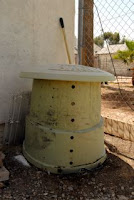 1) Get a bin: Compost needs a certain critical mass of organic material to create enough heat for decomposition to occur.. Something to contain this matter is helpful. Most city waste departments now offer a free or low cost waste bin to be used for compost. Just check your city’s website or call the waste management department.
2) Fill it: All manner of waste can go into a compost bin. There are two basic types of organic waste: nitrogen-rich (aka “greens”) and carbon-rich (aka “browns”). Use about twice as much carbon-rich material as nitrogen-rich. Some good carbon-rich materials include dead tree and shrub leaves, cardboard, newspaper, shredded paper and wood chips. As far as nitrogen-rich materials go, think of fresh grass clippings, green yard waste, vegetable scraps from the kitchen and even hair (think of Fido’s brush).
3) Turn and water: Organic matter needs both oxygen and moisture to break down. To add more oxygen, give compost a turn every once in a while with a pitchfork or shovel and keep compost generally as moist as a wrung-out sponge.
There you have it! Let nature take its course. In a matter of time, some of the best garden food ever, all made from stuff that would have thrown away, is free to use in the garden.
For more details including a complete list of WHAT you can compost - attend a workshop I am doing on Saturday, October 2nd from 1pm - 2:30 pm with the Phoenix Permaculture Guild.
Location: Central Slope Design Center
Street: 8801 N. Central Ave
City/Town: Phoenix, AZ 85020
Hope to see you at class soon!
Happy Digging,
Doreen Pollack
aka the Garden Goddess
http://www.down2earthgardens.com/
The benefits for the garden are many: it improves soil structure and also water retention, helping to keep plants healthier for longer in dry conditions. It provides a source of slow-release, organic fertilizer for plants, while at the same time boosting the community of microorganisms and other creatures beneficial for plant.
Composting is as easy as 1-2-3.
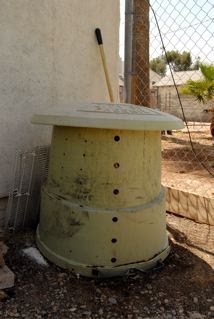
2) Fill it: All manner of waste can go into a compost bin. There are two basic types of organic waste: nitrogen-rich (aka “greens”) and carbon-rich (aka “browns”). Use about twice as much carbon-rich material as nitrogen-rich. Some good carbon-rich materials include dead tree and shrub leaves, cardboard, newspaper, shredded paper and wood chips. As far as nitrogen-rich materials go, think of fresh grass clippings, green yard waste, vegetable scraps from the kitchen and even hair (think of Fido’s brush).
3) Turn and water: Organic matter needs both oxygen and moisture to break down. To add more oxygen, give compost a turn every once in a while with a pitchfork or shovel and keep compost generally as moist as a wrung-out sponge.
There you have it! Let nature take its course. In a matter of time, some of the best garden food ever, all made from stuff that would have thrown away, is free to use in the garden.
For more details including a complete list of WHAT you can compost - attend a workshop I am doing on Saturday, October 2nd from 1pm - 2:30 pm with the Phoenix Permaculture Guild.
Location: Central Slope Design Center
Street: 8801 N. Central Ave
City/Town: Phoenix, AZ 85020
Hope to see you at class soon!
Happy Digging,
Doreen Pollack
aka the Garden Goddess
http://www.down2earthgardens.com/
Monday, September 13, 2010
Fall Means a Fresh Start in the Garden
There is a change in the air in Phoenix. The evenings and mornings are definitely cooler. The humidity is gone and so is the monsoon rain. The leaves on the Mulberry trees are starting to yellow slightly and drop.
This slight shift always has me feeling hopeful and excited for another planting and growing season. Time to clean out the garden beds, re-build the soil with my compost, rake it smooth and get the seeds planted. Time to make the row markers, set out a plan of what goes where, and start to think about the color that comes from flowers in the garden. Oh I almost forgot, I pick a new edible plant to grow each year – I wonder what it will be this year – Do you have a suggestion for me?
 While I was watering yesterday, I noticed one of my artichoke plants is emerging from its summer rest. I have two – I hope the other one comes back!
I like to take a reasonably-paced approach to getting the gardens ready for a new season. I start with getting the garden cleared and soil amended one week. I like to let the compost and any other amendments sit in the ground for a week at least before I plant into it. Looks like I will be doing this on Sunday morning while it is cool. That also lets me take stock of my seeds and purchase anything I may still need. However – after the bounty I got at the American Community Gardening Association Conference I attended in August and the seeds I got at the Seed Swap last week I think I may be set this year!
 I also have new seeds from Humble Seed for an herb garden – aptly called Uncle Herb’s Favorites – 10 different herbs in a great package that can be reused. What I love about this company is they are very particular about where they get seeds and the package them locally using the Marc Center.
So in a few weeks I will be planting out my new garden. I am excited about eating fresh lettuce, spinach and other greens, beets and peas – all in about 2 more months! The gap between will need to be supplemented by the farmers markets.
What are your plans for a fall garden? Please let me know if I can help. I am starting to book consultations now – just email me at gardengoddess@down2earthgardens.com or call 623-217-6038.
Happy Digging,
The Garden Goddess
http://www.down2earthgardens.com/
This slight shift always has me feeling hopeful and excited for another planting and growing season. Time to clean out the garden beds, re-build the soil with my compost, rake it smooth and get the seeds planted. Time to make the row markers, set out a plan of what goes where, and start to think about the color that comes from flowers in the garden. Oh I almost forgot, I pick a new edible plant to grow each year – I wonder what it will be this year – Do you have a suggestion for me?

I like to take a reasonably-paced approach to getting the gardens ready for a new season. I start with getting the garden cleared and soil amended one week. I like to let the compost and any other amendments sit in the ground for a week at least before I plant into it. Looks like I will be doing this on Sunday morning while it is cool. That also lets me take stock of my seeds and purchase anything I may still need. However – after the bounty I got at the American Community Gardening Association Conference I attended in August and the seeds I got at the Seed Swap last week I think I may be set this year!

So in a few weeks I will be planting out my new garden. I am excited about eating fresh lettuce, spinach and other greens, beets and peas – all in about 2 more months! The gap between will need to be supplemented by the farmers markets.
What are your plans for a fall garden? Please let me know if I can help. I am starting to book consultations now – just email me at gardengoddess@down2earthgardens.com or call 623-217-6038.
Happy Digging,
The Garden Goddess
http://www.down2earthgardens.com/
Tuesday, September 7, 2010
September Garden Tips - Fertilize Citrus NOW
September Gardening Tips
(as found on the Maricopa County Extension Office website and
What to do in Your Garden this Month)

Turf
- Fertilize Bermuda-grass lawns with Nitrogen each month beginning late April or early May according to the directions on the package.
- Apply Iron each month according to the directions on the package.
- Apply one inch of water per week to Bermuda lawns. Water deep and less often. Find watering instructions here on Arizona Water Users Association website
Vegetables
- Prepare bed for fall planting: add organic materials, compost, nitrogen (blood meal)
- Plant Seeds: Snap Peas, Beets, Bok Choy, Broccoli, Brussels Sprouts, Cabbage, Chinese Cabbage, Carrots, Cauliflower, Celery, Chard, Collard Greens, Endive, Garlic, Kale, Kohlrabi, Leeks, Mustard, Onions, Peas, Turnips
Herbs
- Prepare bed for fall planting: add organic materials like compost
- Plant Seeds: Cilantro, Lavender, Parsley, Sage, Thyme, Oregano (transplant- will spread)
Roses
- Resume full fertilizing of established roses as the weather cools
- Toward the end of August and into September add an iron supplement if roses show yellowing from iron deficiency
Succulents
- Plant and spilt agaves, yuccas and cactus (remember the holidays are coming – put in a nice pot for a gift)
- Cut back on watering when temps drop by 10 degrees. Should spread out watering to 3-4weeks for small plants; 5-6 weeks large plants during winter.
Fruit and Nut Trees
- Fertilize Citrus by mid-month.
- Cut back on water once temps are below 100 degrees to every two weeks. Helps Citrus and deciduous fruit trees prepare for winter.
- Apply nitrogen and zinc to pecan trees to produce normal size leaf growth and to enhance kernel development. Pecans also need more water than most other shade trees.
Landscape Plants
- Apply mulch (a great use for your compost!) to the ground around heat sensitive plants keep the roots cooler and prevent evaporation.
- Cut off spent blooms to stimulate rebloom
- Native and imported heat tolerant plants can be planted right through the September. They will need to be watered on a regular basis until it cools in fall.
- Protect newly transplanted trees from heavy winds and dust storms by staking carefully
- Plant any non frost sensitive tree
- Final fertilizer for container plants.
Annuals
- Plant flower seeds when under 100 degrees. Here's a list to guide you.
- Bulbs – Buy now & refrigerate for 6-8 weeks in a brown bag in an area by themselves (not with fruit or veggies). Can plant when below 90 degrees during day.
Don't List . . .
-Do not increase opportunities for fungal disease on turf by over watering or watering at night.
-DO NOT OVER WATER which will result in root rot. Allow the soil to dry out between watering.
Doreen Pollack is the Garden Goddess and owner of Down 2 Earth Gardens, providing garden consultations and coaching. Join her for free gardening tips at monthly What to Do in Your Garden this Month workshops. To find a workshop near you, visit www.down2earthgardens.com or call 623.217.6038.
Friday, August 27, 2010
Time to get the Garden Ready for Fall
It may feel hot and muggy in these dog days of summer, but this is the time to get the garden beds ready for fall planting. As I cut back last years wildflowers and saved the seeds I decided to keep the base of the plant in tact and left some leaves on it to see if it will come back in the spring. The leaves were still green, so my guess is it will. I love to see what plants naturalize in my garden. Annuals to some areas of the country become perennials in my garden!
I decided to dig out the hollyhocks that somehow found there way into my vegetable garden. They took up too much precious real estate. Out came the wild amaranth and anything else that was not going to produce food for me this winter.
The sweet pepper plants are holding their own fairly well this summer so they were allowed to stay - one of them is now 18 months in the garden and still producing red sweet peppers! In fact, you will find that sweet peppers will bounced back in the fall and produce another crop!
The basil is doing well, too. There are 2 eggplants that have not produced any fruit yet, nor flowered, but I will leave them in for now and see if they come back once it cools down again.
I also started to amend the soil in another garden bed. I used my own compost and mixed it in with the existing garden soil with a shovel and water it well with rain water from my rain barrels. I do a section every few days and it makes the process seem like less work.
 The seed nursery is also started - I am using the broccoli seed from my own plant. I bought some peat pellets (they expand to almost 2 inches when wet) and placed a few seeds in each one last Saturday morning. By Monday they had sprouted and they are now taller then the little hot house I created using a plastic lettuce container I got from the grocery store.

These little hot houses work well because they keep the moisture in so the seed scan sprout. I also use the clear plastic clam shells.
Another thing you can use to make your own small seed starting pots are the cardboard rolls from paper towels and toilet paper. I just cut them to about 2 inches tall, put them in one of these little hot houses, fill them with potting spoil and plant the seeds. Then when the seedlings get big enough the entire roll can be planted directly into your garden or a larger pot if the garden is not ready or you wish to give them to someone.
October 1st is the target date for planting seeds into my garden beds. I may start a few more seeds before then, but mostly seeds in the ground this year.
What about you? What are your plans for your edible garden this year??
Happy Digging,
The Garden Goddess
http://www.donw2earthgardens.com/
I decided to dig out the hollyhocks that somehow found there way into my vegetable garden. They took up too much precious real estate. Out came the wild amaranth and anything else that was not going to produce food for me this winter.
The sweet pepper plants are holding their own fairly well this summer so they were allowed to stay - one of them is now 18 months in the garden and still producing red sweet peppers! In fact, you will find that sweet peppers will bounced back in the fall and produce another crop!
The basil is doing well, too. There are 2 eggplants that have not produced any fruit yet, nor flowered, but I will leave them in for now and see if they come back once it cools down again.
I also started to amend the soil in another garden bed. I used my own compost and mixed it in with the existing garden soil with a shovel and water it well with rain water from my rain barrels. I do a section every few days and it makes the process seem like less work.


These little hot houses work well because they keep the moisture in so the seed scan sprout. I also use the clear plastic clam shells.
Another thing you can use to make your own small seed starting pots are the cardboard rolls from paper towels and toilet paper. I just cut them to about 2 inches tall, put them in one of these little hot houses, fill them with potting spoil and plant the seeds. Then when the seedlings get big enough the entire roll can be planted directly into your garden or a larger pot if the garden is not ready or you wish to give them to someone.
 |
| Paper rolls cut for pots |
October 1st is the target date for planting seeds into my garden beds. I may start a few more seeds before then, but mostly seeds in the ground this year.
What about you? What are your plans for your edible garden this year??
Happy Digging,
The Garden Goddess
http://www.donw2earthgardens.com/
Tuesday, August 17, 2010
Prickly Pear Juice Making

Both fruits and pads of the prickly pear cactus are rich in slowly absorbed soluble fibers that may help keep blood sugar stable. However, I suspect that after I make this yummy juice into a syrup, it won't be so blood sugar friendly!
Here's a quick step by step description of the process:

There is no boiling or cooking involved in this process!


This pulpy substance will be too thick to strain through the cloth on its own, so you will need to squeeze it through the cloth, This was the messy part. It is best to use a colander to further strain out any seeds and of course you need a bowl or pitcher to catch the juice!
That's all there is to making the Prickly Pear tuna into juice. Now I can further process it into syrups, jellies and then use that for all kinds of things like candy, cocktails, lemonade, smoothies and whatever else my imagination dreams up!

Here's a trivia fact for you - The Prickly Pear Cactus is the state plant of Texas!
What is your favorite way to use Prickly Pear Syrup??
The Garden Goddess,
http://www.down2earthgardens.com/
Monday, July 5, 2010
Protecting your Garden from the Birds
 I wrote an article last month about using netting as a way to protect your prized fruit trees and vegetable garden from the birds. And I got an education about WHY THAT MAY NOT BE THE BEST SOLUTION!
- Hang old CDs or DVDs in the tree with a sturdy twine. Do not use fishing wire for the same reason that it could get wrapped around a birds led or body.
- Use very sheer curtains you get from a thrift shop, yard sale, or your own linen closet!
- Same for using any sheer material with really small holes so the bird can’t get tangled in them
- Pick the fruit and let it ripen off the tree somewhere safe from the birds.
Always plant more than you need, in case the birds get to it before you!! Share the surplus is a Permaculture ethic and one that goes to animals and as well as humans. You won’t be so discouraged if you have plenty of food in the garden for everyone.
The Garden Goddess
Wednesday, March 24, 2010
Radicchio Rosettes


The front garden needed a little clean up – the radishes where still in the ground and covered in aphids, so they got pulled out. And the radicchio had not been thinned. This bed is planted and managed by volunteers more as a demonstration garden and doesn’t get the TLC it needs. As I was thinning the radicchio, I threw the immature leaves in my bag and took them home for a salad.
 While I was cleaning the radicchio, I noticed how the leaves all curled into each other like a rose, making these pretty rosettes.
This may be one of the prettiest lettuces I have ever seen and eaten!
Happy Digging,
The Garden Goddess
http://www.down2earthgardens.com/
Subscribe to:
Posts (Atom)

 Posts
Posts


